


Description
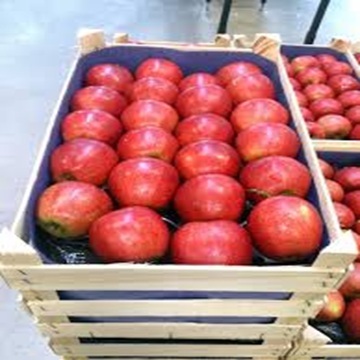
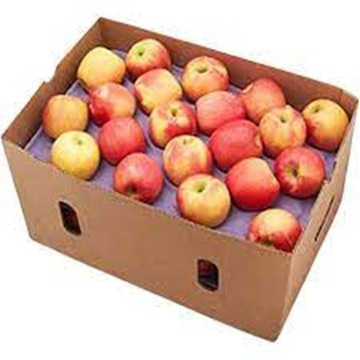
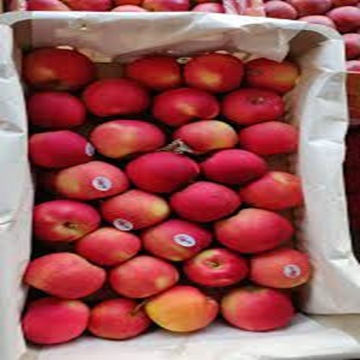
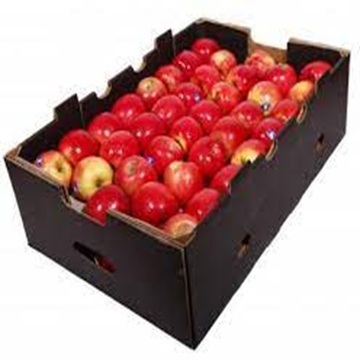
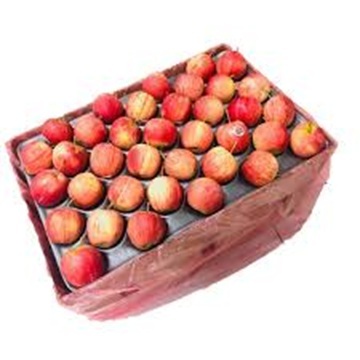
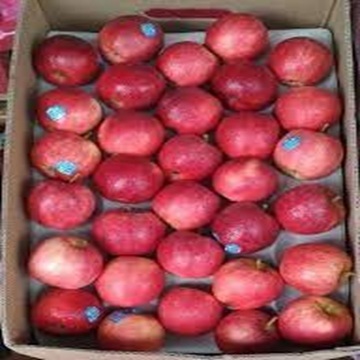
Order by the Pallet Royal Gala Apples for Sale at Best Prices
Order by the Pallet Royal Gala Apples for Sale at Best Prices
Royal Gala is one of the world’s most popular apple varieties, renowned for its sweet, crisp, and aromatic flavor. It is a direct descendant of the famous Kidd’s Orange Red.
1. Types & Varieties (Strains/Clones)
While “Royal Gala” is a specific cultivar, horticulturists have developed numerous improved strains (or clones) through natural mutations. These strains are selected for enhanced color, maturity timing, and growth habits. All are genetically Gala but offer distinct advantages.
| Strain Name | Key Characteristics | Maturity & Advantages |
|---|---|---|
| Standard Royal Gala | The original, with a yellow-orange background and red stripes. | The baseline for comparison. Good flavor but less intense color. |
| Brookfield Gala | An early, heavily colored sport. Deep red stripes over a creamy background. | Ripens 7-10 days earlier. High color makes it marketably attractive. |
| Fulford Gala | Similar to Brookfield, known for its strong, solid red blush. | Reliable and consistent producer of well-colored fruit. |
| Galaxy Gala (Mondial Gala) | One of the most popular strains. Develops an intense, solid red cover. | Excellent, uniform color. The benchmark for premium Gala types. |
| Big Buck Gala | Known for its larger fruit size while maintaining the classic Gala flavor. | Addresses the common issue of small fruit size in some Gala orchards. |
| Scarlet Gala | As the name implies, it has a vibrant scarlet-red stripe pattern. | Valued for its eye-catching, bright red color in the marketplace. |
Note on “Gala” vs. “Royal Gala”: Technically, ‘Gala’ is the original variety, and ‘Royal Gala’ is a specific, more highly-colored sport that became the commercial standard. In practice, the names are often used interchangeably.
2. Importance & Key Features
Royal Gala’s global popularity is due to a combination of consumer-friendly traits and reliable cultivation.
A. For the Consumer:
- Flavor Profile: Distinctly sweet with low acidity, and a pleasant, aromatic floral hint. It lacks the tartness of varieties like Granny Smith, making it a favorite for children.
- Texture: Crisp and juicy with a fine-grained, firm flesh. It has an excellent crunch when fresh.
- Versatility: Excellent for:
- Fresh Eating: The primary use.
- Salads: Doesn’t brown too quickly.
- Desserts: Pies, tarts, and sauces (though it holds its shape less than firmer varieties like Braeburn).
- Juicing & Cider: Adds sweetness to blends.
B. For the Grower & Supply Chain:
- Early Harvest: It is an early-season apple (harvested late summer/early autumn, depending on hemisphere), allowing growers to access the market before later varieties.
- High Productivity: The trees are reliable and prolific bearers.
- Good Storageability: While best eaten fresh, it stores reasonably well in controlled atmosphere (CA) storage, allowing for year-round availability.
3. Detailed Specifications
A. Physical & Sensory Specifications:
| Parameter | Specification |
|---|---|
| Size | Typically medium, 65-80mm in diameter. Counts range from 80 to 138 (number of apples in a 40lb/18kg carton). Premium sizes are 80, 88, and 100. |
| Weight | Approximately 140-180 grams per apple. |
| Shape | Uniform, conical to round-conical. Distinctly ribbed at the crown. |
| Skin Color | Base color is cream to yellow. Over-color is a distinctive orange-red to crimson red, with subtle stripes (varies by strain). The skin is thin but firm. |
| Flesh Color | Creamy white to pale yellow. |
| Firmness | Minimum 12 lbs (5.4 kg) as measured by a penetrometer (8mm tip). Premium fruit is often >14 lbs (6.4 kg). |
| Brix (Sugar Content) | Typically 12-15%. A minimum of 12% is standard for commercial quality. |
| Acidity | Low, around 0.3-0.5% malic acid. |
| Starch Index | Used to determine maturity. At harvest, a reading of 4-6 (on a 1-8 scale) is common for fruit destined for long-term storage. |
B. Quality & Defect Tolerance:
- Grade: Must be well-formed, clean, and free from damage.
- Defects: Only minor, superficial defects are allowed (e.g., slight russeting in the stem cavity). Free from bruises, blemishes, insect damage, and decay.
- Stem: A intact stem is often required for top-grade fruit.

Reviews
There are no reviews yet.